
The real cost of staying on grid-only power
Metro Manila households now pay among the highest electricity rates in Southeast Asia. A family consuming 400 kWh a month routinely sees bills above ₱5,000 — before fuel and generation charge adjustments.
A hybrid solar system doesn't just generate power. It decides, every minute of the day, whether grid, solar, or battery is the cheapest source available.
How the SuperSafe hybrid stack works
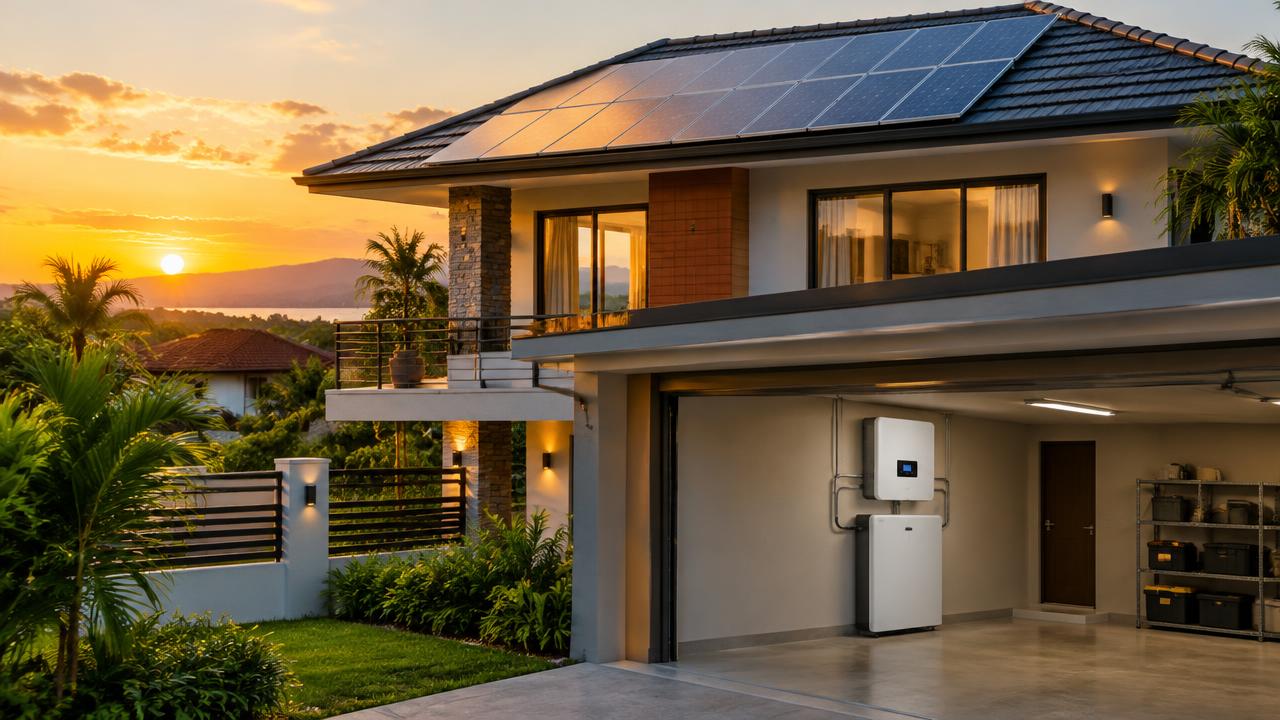
- Daytime: Solar panels power the home directly. Excess energy charges the LiFePO4 battery instead of being wasted.
- Evening peak: The battery discharges during the most expensive hours, when Meralco's generation charge is highest.
- Brownouts: The system islands itself in under 10 milliseconds — your refrigerator and Wi-Fi never notice.
Where the 80% comes from
| Load profile | Grid-only bill | With SuperSafe 6.2kW + 16.38kWh |
|---|---|---|
| 300 kWh / month | ≈ ₱3,900 | ≈ ₱900 |
| 400 kWh / month | ≈ ₱5,300 | ≈ ₱1,100 |
| 600 kWh / month | ≈ ₱8,100 | ≈ ₱1,700 |
Savings come from three stacked effects: self-consumed solar, peak-hour battery discharge, and net metering credits for exported surplus.
Net metering in the Philippines
Under the ERC Net Metering Program, exported energy earns credits on your bill. A correctly sized SuperSafe system exports during midday and draws almost nothing at night.
Sizing it right
Most 3–4 bedroom homes land on the SuperSafe 6.2kW PRO paired with a single 16.38kWh battery. Homes with multiple aircons or a home office step up to the 12kW PRO. Talk to a verified BIZPRO representative for a free load audit.